
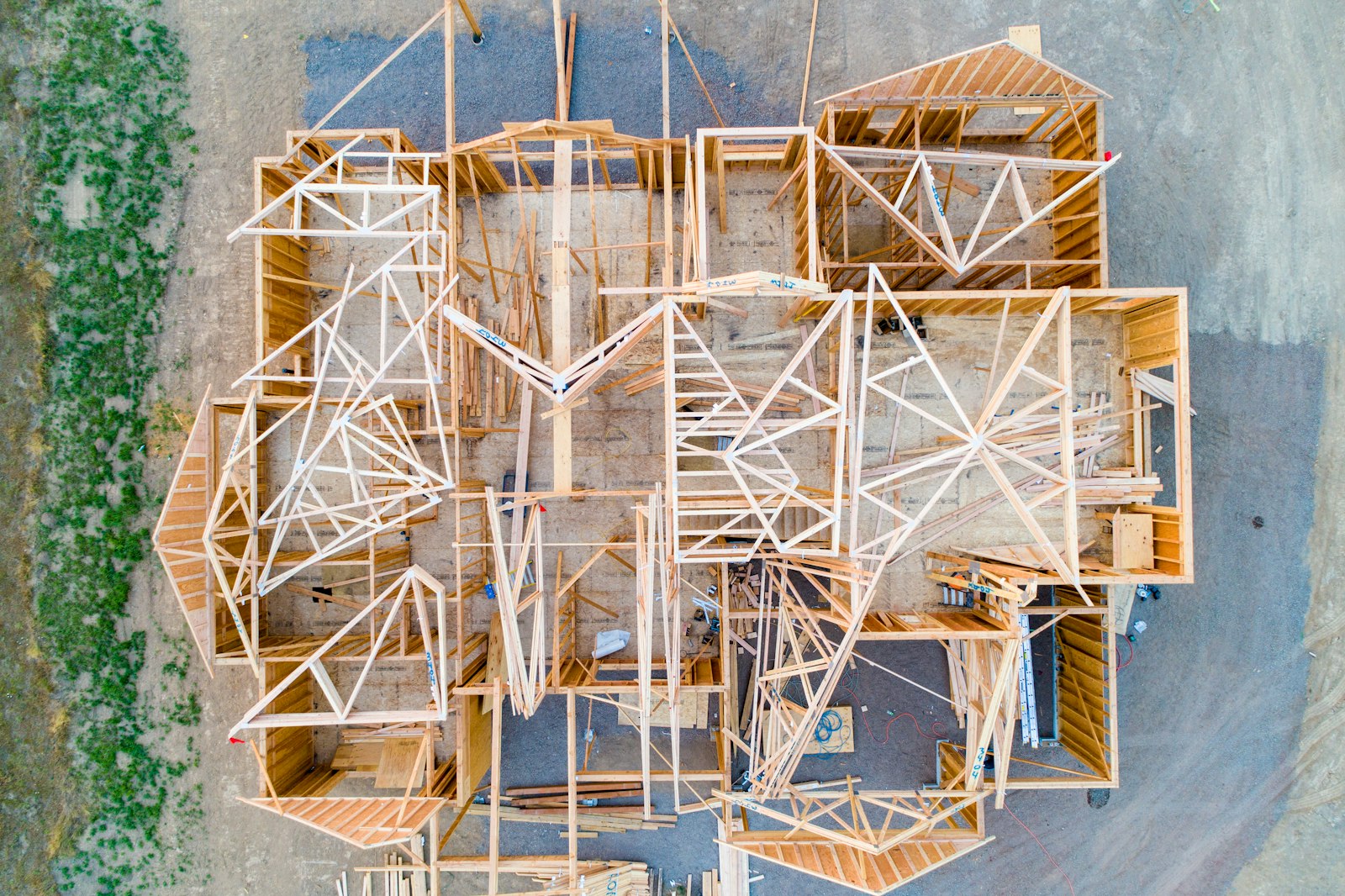
TL;DR: Going owner builder in Australia means you take on the licensed builder's legal role, not just their margin. Every state and territory sets a dollar threshold above which you need a permit, certificate or approval, and most make you sit an assessment before you can apply. The insurance that matters usually is not the policy you buy while building, it is the warranty cover you cannot buy at all, which bites when you sell inside your state's disclosure window (roughly 5 to 7.5 years depending on where you are). Budget for contract works and public liability from day one, treat every trade quote as ex-GST until proven otherwise, and keep your approvals, invoices and defects in one place from the first excavation. The savings are real. So is the paperwork.
If you are weighing up an owner builder Australia project, the pitch is simple and mostly true: cut the builder's margin, run the trades yourself, keep the difference. What the pitch leaves out is that the moment your permit is issued, you inherit the duties that margin was paying for. You are the one the surveyor calls. You are the one who has to prove the frame meets AS 1684. You are the one a buyer's solicitor asks about in six years' time. This guide covers what each state actually requires, what insurance does and does not cover you, and the traps that catch people in the first month.
What being an owner-builder actually means
An owner-builder is a person who takes on building work on their own land without holding a builder's licence. You are not exempt from the rules. You are substituted into them.
Three things stay exactly the same whether a registered builder or you runs the job:
- The National Construction Code applies in full. Performance requirements, energy efficiency, waterproofing, stairs, balustrades. The NCC is free to read at ncc.abcb.gov.au, and your building surveyor will assess against the edition in force in your state.
- Australian Standards referenced by the NCC apply, including AS 1684 for residential timber-framed construction. Bracing and tie-down are the two things owner-builders most often get pulled up on, because they are cheap to get wrong and expensive to fix once lined.
- Licensed trades stay licensed. Electrical, plumbing, gas and asbestos removal cannot be done by you, at any value, in any state. A certificate of compliance from a licensed sparky is not optional paperwork, it is the thing that makes the work legal and insurable.
What changes is who carries the risk. There is no builder to chase for defects, because you are the builder.
Owner builder Australia permits: what each state and territory requires
The structure is the same everywhere, the numbers are not. You need approval once the value of the work crosses a threshold, and most jurisdictions require an approved course or assessment before you can apply.
| Where | Who approves | Approval needed above roughly | Also worth knowing |
|---|---|---|---|
| NSW | NSW Fair Trading (apply via Service NSW) | $10,000 | Approved owner-builder course required above about $20,000 |
| VIC | Victorian Building Authority | $16,000 | Online knowledge assessment before applying; generally one certificate per 5 years |
| QLD | QBCC | $11,000 | Approved course required; generally one permit per 6 years |
| WA | Building and Energy | $20,000 | Approval generally limited to once in 6 years |
| SA | Council or private certifier for development approval; CBS for licensing questions | No separate owner-builder permit in the same form | Restrictions bite on resale, not at application |
| TAS | Consumer, Building and Occupational Services | Tied to permit category, not a single figure | Owner-builder declaration required |
| ACT | Access Canberra | Exemption applied for, course required | |
| NT | NT Building Practitioners Board | Around $12,000 |
Treat every number in that table as a starting point, not a fact you can rely on. These thresholds are set in regulation, they have all moved at least once, and Victoria's building regulator has been undergoing structural change. Confirm the current figure and the current application process on your regulator's own site before you lodge anything. If a figure and the regulator disagree, the regulator is right.
The threshold is the value of the work, not what you spend
This is the single most common misreading, and it is the one that voids permits.
The threshold is the market value of the completed work, including materials, labour and GST, whether or not money changed hands. Your brother-in-law framing for free counts at what a framer would charge. Materials your supplier gave you at cost count at retail. A $40,000 job where you have negotiated hard is still a $55,000 job for threshold purposes if that is what it would cost at arm's length.
Two consequences follow. First, do the valuation properly before you decide you are under the line, because building without a required permit is an offence and it also makes the work very hard to certify later. Second, if you are close to the line, you are almost certainly over it. Add a contingency to the valuation the same way you would to a budget. Our piece on renovation cost blowouts and what the Victorian buffer warning means covers why the buffer belongs in the number from the start rather than being discovered later.
Owner-builder warranty insurance: the bit that bites when you sell
Every state runs a domestic building warranty scheme under a different name: Home Building Compensation in NSW, domestic building insurance in Victoria, the QBCC home warranty scheme in Queensland, home indemnity insurance in WA, building indemnity insurance in SA.
Here is the part people miss. As an owner-builder you generally cannot buy that cover for your own work. The schemes exist to protect a homeowner against a builder who dies, disappears or becomes insolvent, and you are not going to make a claim against yourself.
What you get instead is an obligation attached to resale. Sell within your state's window and you must disclose that the work was done by an owner-builder and, in some states, provide a defects inspection report and arrange cover for the buyer. The windows sit roughly between 5 and 7.5 years depending on the jurisdiction. Victoria's is tied to 6 years and 6 months from completion, NSW's structural warranty runs to 6 years with a longer disclosure obligation, Queensland's disclosure runs to 6 years. Confirm your own before you plan around it.
The practical effect on your numbers: an owner-builder home sold inside that window usually attracts a discount from buyers and more scrutiny from their lender. If your plan was to build and flip in year two, put that discount in the feasibility now. If you are staying ten years, the issue largely evaporates.
The insurance you actually need while building
Warranty cover is the one you cannot get. These are the ones you can, and should:
- Contract works (construction) insurance. Covers the partly built structure and materials on site against fire, storm, theft and malicious damage. Your standard home and contents policy almost certainly excludes a live building site, and many insurers will not renew a policy on a house under substantial renovation without being told. Tell them.
- Public liability. Covers injury or property damage to third parties, including the neighbour's car and the passer-by. Ten or twenty million is the range commonly asked for in AU residential work, and some councils and suppliers will ask to see the certificate.
- Personal accident. You are not an employee, so workers compensation does not cover you when you fall off your own scaffold. Income protection or a personal accident policy fills a gap most owner-builders do not know they have.
- Anyone you engage directly. If you pay someone who is not running their own business with their own cover, you may have workers compensation obligations. Check with your state insurer before the first pay.
You are the principal contractor now
Under work health and safety law you are likely a person conducting a business or undertaking on that site, with duties to the trades who come onto it. That means the site set-up, safe access, fall protection above two metres, and asbestos identification in anything built before 1990 are your problem, not the subcontractor's alone. Safe Work Australia publishes the model codes of practice that most states have adopted, and the construction ones are readable in an evening.
You are also the one holding the program. Trades sequence off each other, and one missed lead time on windows or trusses moves everything behind it. Approvals are their own queue: our look at what building approval data says about pipelines that stall is a useful reminder that the permit clock is rarely the fastest part of a job.
GST, quotes and the money traps
Trade quotes to an owner-builder are frequently ex-GST, because trades are used to quoting builders who claim the credits back. You generally cannot, unless you are registered for GST and carrying on an enterprise, which a one-off home build usually is not. A $60,000 ex-GST quote is $66,000 out of your account. Ask "is that including GST" on every quote and write the answer on the quote.
Three more money traps worth naming:
- Trades will invoice you on progress claims, and they expect to be paid on the same terms they give builders. Knowing how the claim and payment schedule mechanism works in your state protects you as the payer, not just the payee. Our practical guide to progress claims in Australian construction walks through it.
- The margin you are saving is smaller than the headline. A registered builder's margin covers supervision, warranty, insurance, defect rectification and their own risk. Our breakdown of construction markup percentage in Australia shows what that number is really made of, which is a fair test of whether the trade is worth it for you.
- Variations have no contract to fall back on. You are agreeing scope changes verbally on site with eight different trades. Write them down the day they happen or you will not remember who agreed what by lock-up.
A getting-started sequence that works
- Value the whole job at market rates, including donated labour, and check it against your state's threshold.
- Do the required course or assessment. It has to come before the application, not after.
- Apply for the owner-builder permit, certificate or approval.
- Get your building permit or development approval through council or a private certifier, with engineered plans.
- Line up contract works and public liability cover before anything is delivered to site.
- Book your licensed trades early, especially the sparky and plumber, and confirm their licence numbers.
- Set up one place for approvals, plans, quotes, invoices, inspection dates and defects, and use it from day one.
That last step sounds like the least important. It is the one people regret skipping, because at handover a surveyor, an insurer, or in six years a buyer's solicitor is going to ask for a document you had at some point.
Where Built Simple fits
Built Simple has a Home Projects plan at $39 per month built specifically for owner-builders running a single project. It covers the job side of what is above: your schedule, your documents, your take-offs and estimates, defects, and a Trade Discount QR you can use at suppliers. It is not legal advice and it does not issue permits. It is the one place your approvals, quotes and invoices live so you are not reconstructing the job from a group chat later.
All 45 calculators, including take-off tools, are free.
If you want to try before you commit to anything, the Built Simple mobile app is a free download and the calculators work without a signup: iOS or Android.
Frequently asked questions
Can I be an owner-builder on an investment property?
Usually not, or not easily. Most jurisdictions require the land to be your principal place of residence or otherwise restrict commercial intent, and several limit how often you can hold a permit (commonly once in 5 or 6 years). Check the exact wording with your regulator, because the definitions differ.
Do I still need a licensed builder for anything?
Yes. Electrical, plumbing, gas fitting and asbestos removal must be done by a licensed practitioner everywhere in Australia, regardless of your permit. Many owner-builders also engage a registered builder for structural stages and self-manage the fit-out, which is a legitimate middle path.
How much does an owner-builder actually save?
Honestly, it depends on how much of the work you do yourself and how well you buy. The saving is the builder's margin and preliminaries, less the resale discount if you sell inside the disclosure window, less your own time. Anyone quoting you a single percentage is guessing.
What happens if I go over the threshold without a permit?
It is an offence in most states, with penalties, but the bigger practical problem is certification and resale. Uncertified work is difficult to get an occupancy permit for, difficult to insure, and difficult to sell. Fix it by talking to your regulator early rather than hoping it goes unnoticed.
Can I get owner-builder warranty insurance if I want it?
Generally no, not for your own work. The schemes are designed to protect a homeowner against a builder, and you are both. What you can and should buy is contract works, public liability and personal accident cover. Confirm the position in your state before you make plans that depend on it.




