
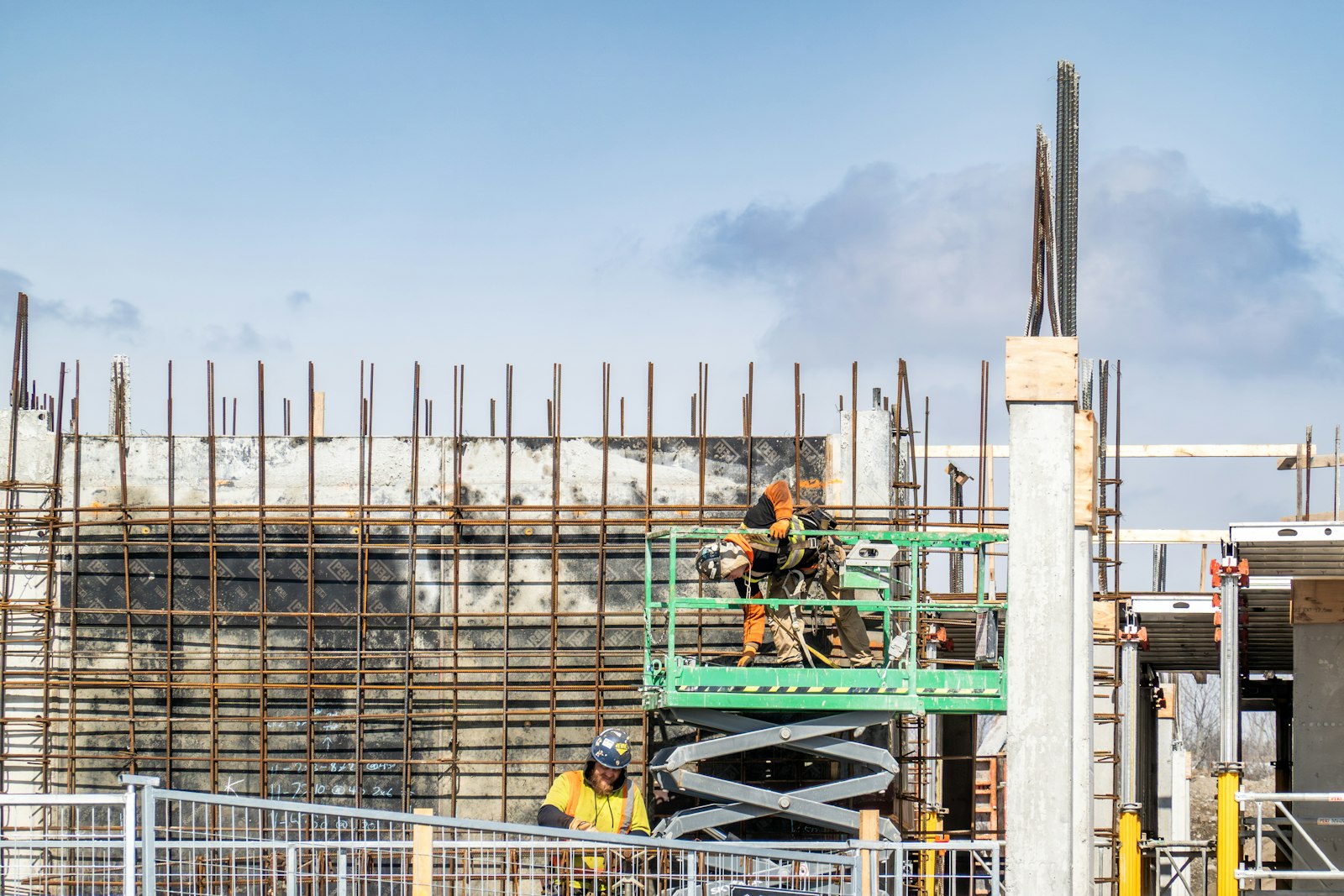
Another residential construction report, another set of mixed results. Building approvals Australia data has been behaving like this for a while now: one month up, the next down, and the commentary swinging with it. Mortgage News Daily's read on the latest residential construction figures lands in the same place. The honest answer for anyone on the tools is that a national headline number is close to useless for deciding whether to put on an apprentice in March.
That does not make the data worthless. It makes it a pipeline signal rather than a work order. Here is what it measures, what it cannot tell you, and what is worth changing in your quoting because of it.
What building approvals Australia actually measures
The Australian Bureau of Statistics publishes Building Approvals, Australia monthly. It counts the jobs approved by councils and private certifiers, split into private sector houses, private sector dwellings excluding houses (townhouses and apartments), and non-residential work.
An approval is not a start. Starts sit in a separate quarterly ABS release, Building Activity, Australia, which reports commencements and completions. Between a certifier's stamp and a slab pour sits finance approval, a signed contract, a soil test, and often a client who has decided they want a different kitchen. A strong approvals month tells you what might reach your books in six to twelve months. It does not tell you what you will be building in six weeks.
The two dwelling series also behave nothing alike. Private houses is the steadier line. Dwellings excluding houses swings hard, because a single large apartment approval moves the national total on its own. When a report says "mixed", that is usually what it means: detached work roughly flat, unit approvals jumping around, and the combined figure describing neither of them.
Why the national number is mixed and your postcode is not
National data averages markets that are not really one market. Greenfield estates in south east Queensland, knock down rebuilds in Melbourne's middle ring and reno work in regional NSW all sit inside the same line on the chart while running on completely different cycles.
There is a pace question underneath it too. The National Housing Accord set a target of 1.2 million new well located homes over five years from 1 July 2024, which works out at roughly 240,000 a year. The approvals run rate has been sitting under that. Read the current month off the ABS release rather than off a summary of it, because revisions matter and the series is genuinely noisy.
Practically: use the national number to sense the weather, and use your own enquiry log to decide anything. If your quote requests are up and your win rate is holding, a soft national month is not your month.
What to change in your quoting when the read is mixed
Three things, all admin, all cheap.
Put a validity period on every quote and mean it. Thirty days is common practice for residential work. In a market where material pricing is not settled, an open ended quote means you are carrying the escalation risk for free. Write the date on the document.
Label your provisional sums and prime cost items properly. Residential building contract rules differ by state and territory, and the disclosure requirements around PC and PS items are not optional. Check your state building authority or your HIA or Master Builders contract notes for the current wording instead of copying last year's template. Same goes for anything you are pricing against NCC or AS 1684 provisions: confirm the current clause at ncc.abcb.gov.au before it goes in a fixed price.
Quote GST inclusive to homeowners. A domestic client who reads $48,000 and pays $52,800 is a dispute waiting to happen, and it is the fastest way to lose a job you had already won.
If you are still building quotes in a spreadsheet, a mixed market is when that hurts most, because you need to re-price quickly and know your margin by trade. Our rundown of the best construction estimating software for Australian builders covers what to look for. For early enquiries where the client has a budget but no plans, the property build cost calculator gets you both to a realistic number before anyone spends a fortnight on drawings.
The admin that keeps you paid through a flat quarter
Know where every quote sits. Sent, chased once, chased twice, won, lost. Most builders lose more work to silence than to price.
Cost jobs as you go, not at the end. A variation you priced in your head in week three is a variation you will argue about in week eleven.
Track your win rate by job type. If extensions convert at 40 per cent and new builds at 12, that is a clearer instruction than any national figure. Our guide to construction project management software for Australian builders walks through how the pieces join up.
Mixed data is not a reason to sit still. It is a reason to get tighter on the part you actually control, which is the paperwork between an enquiry and a paid invoice.
Built Simple is free to start, and the mobile app puts all 45 calculators in your pocket on site with no signup. Have a look at builtsimple.com.au when you are next stuck in the ute waiting on a delivery.
Related: Building approvals Australia: why the national number tells you almost nothing about your patch




