
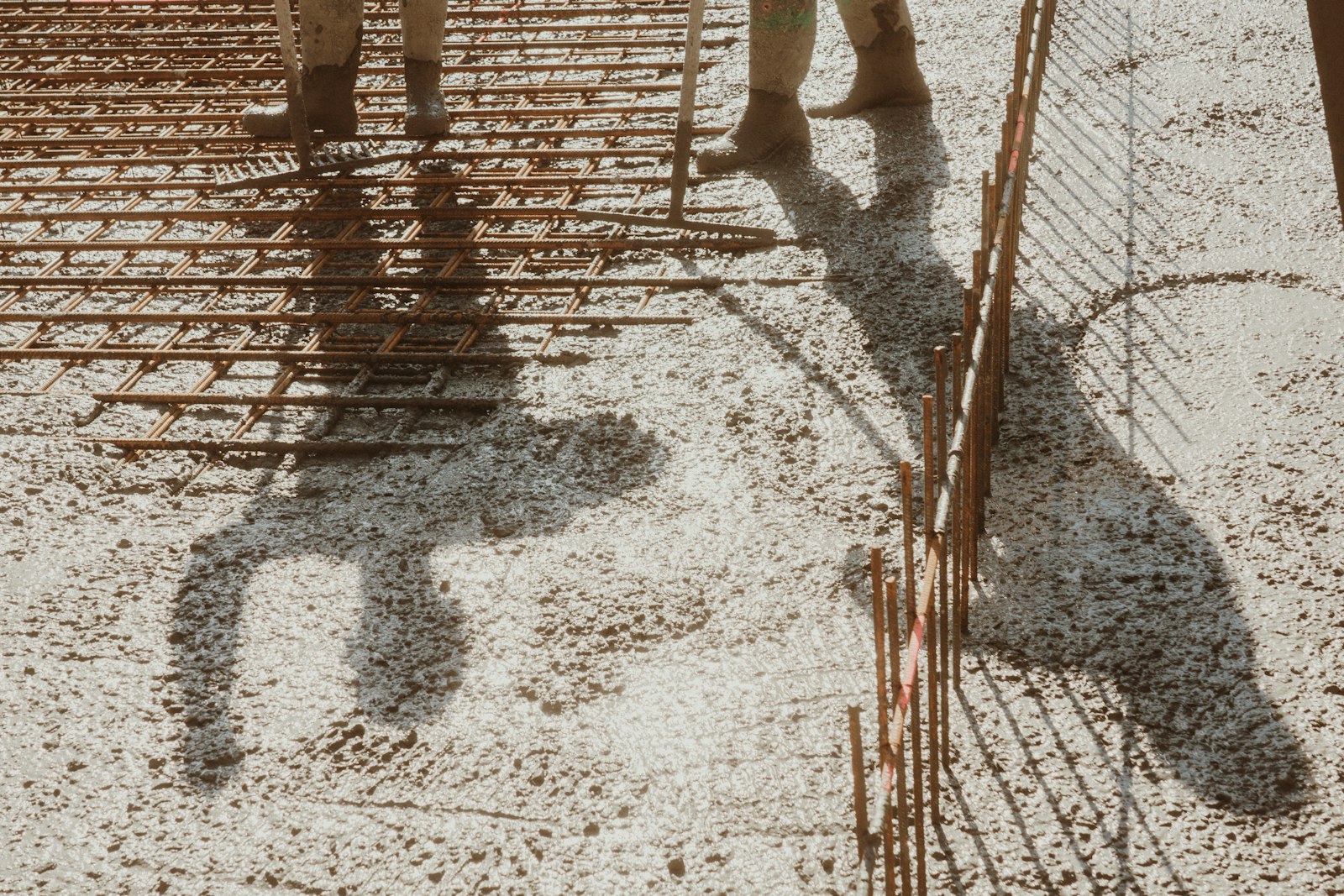
TL;DR: Ready-mix concrete costs $295 to $420 per m³ ex-GST for standard N20 to N32 mixes delivered to a metro site in 2026. VIC and NSW metro are the cheapest markets ($295 to $360/m³), while NT, regional WA and remote sites often run $480+/m³. Anything under 4 m³ cops a part-load surcharge of roughly $60 to $90 per "missing" cubic metre. A pump adds $650 to $1,200 to a small residential pour, barrowing is free but slow. Worked example below: a 30 m² x 100 mm slab (3 m³ of N20) in suburban Melbourne lands at roughly $1,650 to $2,100 delivered and pumped, before labour and finish.
Concrete pricing looks simple on the supplier's website. One number, dollars per cubic metre. By the time the truck arrives it's anything but, because the headline rate only covers the mix. This guide breaks down the real concrete cost per m3 Australia wide for 2026: prices by state, what the N-grade on your engineer's drawing actually costs, how pump versus barrow changes the bill, and a fully costed sample pour so you can see where every dollar goes.
The invoice you actually pay is shaped by the state you're pouring in, the grade the engineer specified, whether you can barrow the mix or need a pump, the truck load size, the day and time of the pour and the finish the client wants. Get the take-off wrong and you wear the part-load fee on every job. Get it right and concrete becomes one of the easiest line items to quote accurately.
Concrete cost per m3 Australia: 2026 prices by state
The table below is the headline number you came here for. Prices are 2026 metro Australian dollars, ex-GST, for a standard N20 mix delivered to an accessible suburban site in normal business hours on a full or near-full truck load (5 to 7 m³). Regional pricing runs 10 to 30% higher, and far-remote and island sites (Tasmania's west coast, NT outside Darwin, far north WA) climb steeply on freight.
| State / Territory | Metro price (N20, full load) | Regional uplift | Notes |
|---|---|---|---|
| Victoria (VIC) | $295-$345/m³ | +10-20% | Melbourne metro is the most competitive concrete market in the country. |
| New South Wales (NSW) | $310-$360/m³ | +10-25% | Sydney CBD pours carry traffic and timing premiums on top of the base rate. |
| Queensland (QLD) | $315-$370/m³ | +15-25% | SEQ is well supplied; Cairns and FNQ run at the top of the range. |
| Western Australia (WA) | $330-$390/m³ | +20-35% | Perth metro is fair; Pilbara and mining-belt deliveries are premium-priced. |
| South Australia (SA) | $305-$360/m³ | +15-25% | Adelaide metro is priced similarly to Melbourne. |
| Tasmania (TAS) | $340-$400/m³ | +15-30% | A smaller batching network means less competitive pricing. |
| ACT | $320-$375/m³ | n/a (compact) | Pricing tracks Sydney; limited number of plants. |
| Northern Territory (NT) | $380-$460/m³ | +25-50% | Darwin is workable; outside Darwin, freight dominates the price. |
Prices are for standard N20 ready-mix on a full or near-full truck, weekday daytime delivery. Add 20 to 40% for higher grades, part-loads, weekends, restricted access or pump-grade slumps.
Key takeaway: the mix price is maybe two-thirds of what you'll actually pay. Truck load size, site access, pump hire and pour timing decide the rest.
What's actually inside the per-metre price
Understanding what you're paying for makes the quote easier to defend when a client asks why "a bit of concrete" costs four figures.
Ready-mix in Australia is specified and supplied under AS 1379, which defines the normal-class N grades you order by. Inside the batch price, cement is the single biggest cost driver, which is why every step up in grade (more cement per cubic metre) costs more. On top of the batch cost sits cartage from the plant, the agitator truck's time on the road and on your site, and any admixtures for the mix design. That's why the same N20 costs more in Hobart than Melbourne: fewer plants, longer runs, less competition.
Two pricing traps catch people who order concrete occasionally rather than weekly:
- GST. Supplier price lists are almost always ex-GST. Add 10% to everything in this guide when you're comparing against a tax invoice or quoting a homeowner a final number.
- Part-load surcharges. Agitator trucks carry 5 to 7 m³. Order less than about 4 m³ and most suppliers charge a part-load fee, typically $60 to $90 per "missing" cubic metre, because the truck burns the same fuel and driver hours either way. A 2 m³ order can carry $120 to $180 in surcharges before the concrete itself.
N-grades explained: N20, N25, N32, N40
The "N" stands for normal-class concrete and the number is the characteristic compressive strength at 28 days, measured in megapascals (MPa). A test cylinder of N32 will resist 32 MPa of compressive load before failing. Higher number, stronger mix, more cement, more dollars per cubic metre.
Picking the grade is purely a structural decision. Going under-spec risks failure, going over-spec just wastes money. Residential slabs and footings are designed to AS 2870, which the National Construction Code references for Class 1 buildings, and your engineer's drawing tells you which grade to order. This is the quick translation:
| Grade | When to use it | 2026 metro premium vs N20 |
|---|---|---|
| N20 | Garden slabs, paths, shed floors, blinding layers, mass fill | Baseline |
| N25 | Residential footings, residential driveways, low-load slabs on ground | +$10-$20/m³ |
| N32 | Most residential and light commercial slabs and footings, the workhorse grade | +$20-$35/m³ |
| N40 | Suspended slabs, structural columns, high-load commercial, exposed marine | +$35-$55/m³ |
Quick rule of thumb: if your engineer hasn't specified a grade, you almost certainly need at least N25 for anything load-bearing. Most modern residential drawings spec N32 for slabs and footings, especially in reactive clay zones (Adelaide, Perth foothills, western Melbourne).
One more reason not to freelance on grade: a slab that cracks because the wrong mix went in isn't a warranty conversation, it's a structural defect you can carry for years under state legislation. Our guide to construction defect liability in Australia covers exactly how long that tail is in each state.
Pump vs barrow: how delivery method changes the bill
Once the truck arrives you still have to move the mix from the chute into the formwork. There are two ways, and the choice changes the day, the slump you order and the bottom line.
Barrow delivery: free, slow, hard work
The truck parks at the kerb, the chute extends to the formwork or a wheelbarrow, and you push the mix the rest of the way.
- Cost adder: $0, it's already included in the truck rate.
- Practical limit: 3 to 4 m³ on flat sites, less if the pour is uphill or behind a house.
- Watch out for: truck waiting time. Most suppliers allow 30 to 45 minutes on site, and every extra 15 minutes costs $40 to $70. Two blokes barrowing 4 m³ will blow through the free window; budget for waiting time or put more wheelbarrows on.
Line pump or boom pump: fast, expensive
A separate pump truck takes the concrete from the agitator's chute and pushes it through a hose straight into the formwork, over fences, through houses, up storeys, anywhere a barrow can't go.
- Line pump: $650 to $900 for up to 4 hours, plus a pump fee of $4 to $6/m³. This is the typical residential slab setup, with hoses run along the ground.
- Boom pump: a truck-mounted articulated arm that places concrete from above. It sits at the top of the residential pump range, generally $900 to $1,200 for a small pour, and is the only sensible option for suspended slabs, multi-storey work or big pours where a line pump can't keep up.
Pumps also want a wetter, pump-grade slump, which the supplier prices as a variation on the standard mix. Tell the batcher you're pumping when you order, not when the truck arrives.
The maths is simple: on a 3 m³ backyard slab, a pump can double the delivered cost. On a 20 m³ commercial pour, the pump pays for itself in truck turnaround time and labour saved. Anything in between, price both and let the site access decide.
Getting the order right: volume, slump and wastage
Concrete is unforgiving on quantity. Order short and the truck leaves while your slab sits half-poured with a cold joint forming. Order long and you're paying to dump the excess.
The volume calc is straightforward: length x width x thickness, in metres. A 6.0 m x 5.0 m shed slab at 100 mm thick is 6.0 x 5.0 x 0.1 = 3.0 m³. Then add a wastage buffer of 5 to 10% for uneven sub-base, spillage and the mix left in the pump line. On that shed slab you'd order 3.2 m³, not 3.0.
Three ordering details that separate the regulars from the once-a-year customers:
- Slump. Standard structural pours run an 80 to 100 mm slump. Pumped pours need a pump-grade mix. Never add water on site to make the mix easier to move, it knocks the strength down and voids the supplier's compliance.
- Aggregate size. 20 mm is standard for slabs and footings; congested reinforcement or thin sections may need 10 to 14 mm, which the supplier prices as a variation.
- Timing. Book the pour for a weekday morning. Weekend and after-hours batching attracts surcharges, and morning pours give you the whole day for finishing before the mix goes off.
The formwork has to be ready before any of this matters. If you're pricing a carpenter to set up boxing, our guide to carpenter day rates in Australia has the 2026 numbers by state. And if you're doing take-offs like this every week across multiple jobs, it's worth moving the calc out of your head and into a proper tool. Our roundup of the best construction estimating software compares the options built for Australian trades.
Concrete quantity logic also applies beyond slabs. Core-filling block walls is a common part-load trap, because the volumes are small and the access is vertical. If you've got retaining or structural block work coming up, our besser block vs concrete block guide covers when each makes sense and what core-fill adds to the job.
Worked example: a 30 m² shed slab in suburban Melbourne
Here's the whole picture on a real pour. The job: a 6.0 m x 5.0 m x 100 mm shed slab in a Melbourne backyard, N20 per the drawings, rear access only, so a line pump is required.
| Line item | Cost (ex-GST) |
|---|---|
| 3.2 m³ N20 (3.0 m³ + wastage) at $295-$345/m³ | $944-$1,104 |
| Part-load surcharge (under 4 m³ minimum) | $60-$90 |
| Line pump, up to 4 hours, incl. $4-$6/m³ pump fee | $650-$900 |
| Delivered and pumped total | ~$1,650-$2,100 |
That's before labour, mesh, formwork and finishing, and before GST goes on top. If the slab were at the front of the block and the crew could barrow straight off the chute, drop the pump line and the same pour lands around $1,000 to $1,200 ex-GST. Same concrete, same slab, roughly $650 to $900 difference on access alone. That's why "how much is concrete?" has no one-number answer.
Seven ways to keep the cost per cubic metre down
- Get past the part-load threshold. Stage the job so pours hit 4 m³ or more, or combine pours (footings and slab, two small jobs on one street) onto one truck.
- Pour weekday mornings. Weekend and after-hours batching carries surcharges you can avoid with scheduling.
- Have the site ready. Formwork done, mesh chaired, crew on deck, wheelbarrows pumped up. Waiting time at $40 to $70 per 15 minutes is the most avoidable charge on the invoice.
- Order the grade on the drawing, no more. N32 where N32 is specced. Upgrading "to be safe" is $20 to $35/m³ of pure margin loss.
- Measure the take-off properly. A 5 to 10% wastage buffer is insurance; a 20% buffer is a donation to the supplier.
- Price barrow vs pump honestly. Under 3 to 4 m³ with decent access, barrowing saves serious money. Beyond that, or with bad access, a pump is usually cheaper than the extra labour and waiting time.
- Confirm access before the truck leaves the plant. Overhead wires, soft ground, tight driveways. A truck that can't get in still costs you, so walk the route the day before.
Frequently asked questions
How much does concrete cost per m³ in Australia in 2026?
For standard N20 to N32 mixes delivered to a metro site, expect $295 to $420 per m³ ex-GST. Victoria and NSW metro sit at the bottom of the range, NT and remote sites at the top. Higher grades, part-loads, weekends and pump-grade mixes add 20 to 40%.
Do quoted concrete prices include GST?
Almost never. Supplier price lists and the figures in this guide are ex-GST, so add 10% for the invoice total. Quote homeowners GST-inclusive to avoid an awkward conversation later.
How much concrete do I need for a slab?
Length x width x thickness in metres gives cubic metres, then add 5 to 10% wastage. A 30 m² slab at 100 mm is 3.0 m³, so order about 3.2 m³.
Is it cheaper to mix bags instead of ordering ready-mix?
Only for tiny jobs. A cubic metre takes roughly 110 x 20 kg bags of pre-mix, and mixing that by hand costs you a full day and your back. Past a few post holes or a small path section, ready-mix wins on both price per cubic metre and quality consistency.
What grade of concrete do I need for a driveway?
N25 is the common residential driveway spec, and many engineers now call N32, particularly in reactive clay areas. The grade on your engineer's drawing is the answer; if there's no drawing, don't guess on anything load-bearing.
Why is there a minimum order fee?
The truck, driver and fuel cost the supplier the same whether it carries 2 m³ or 6 m³. The part-load surcharge (about $60 to $90 per cubic metre under the minimum, usually 4 m³) covers the gap. Plan your pours to fill the truck and the fee disappears.
Price the pour before you book the truck
Every number in this guide feeds one calculation: dimensions to cubic metres to grade to delivered cost. The free Built Simple app does that maths for you, with a concrete calculator alongside 44 other trade calculators, no signup needed. Grab it on the App Store or Google Play and price your next slab from the ute.




