
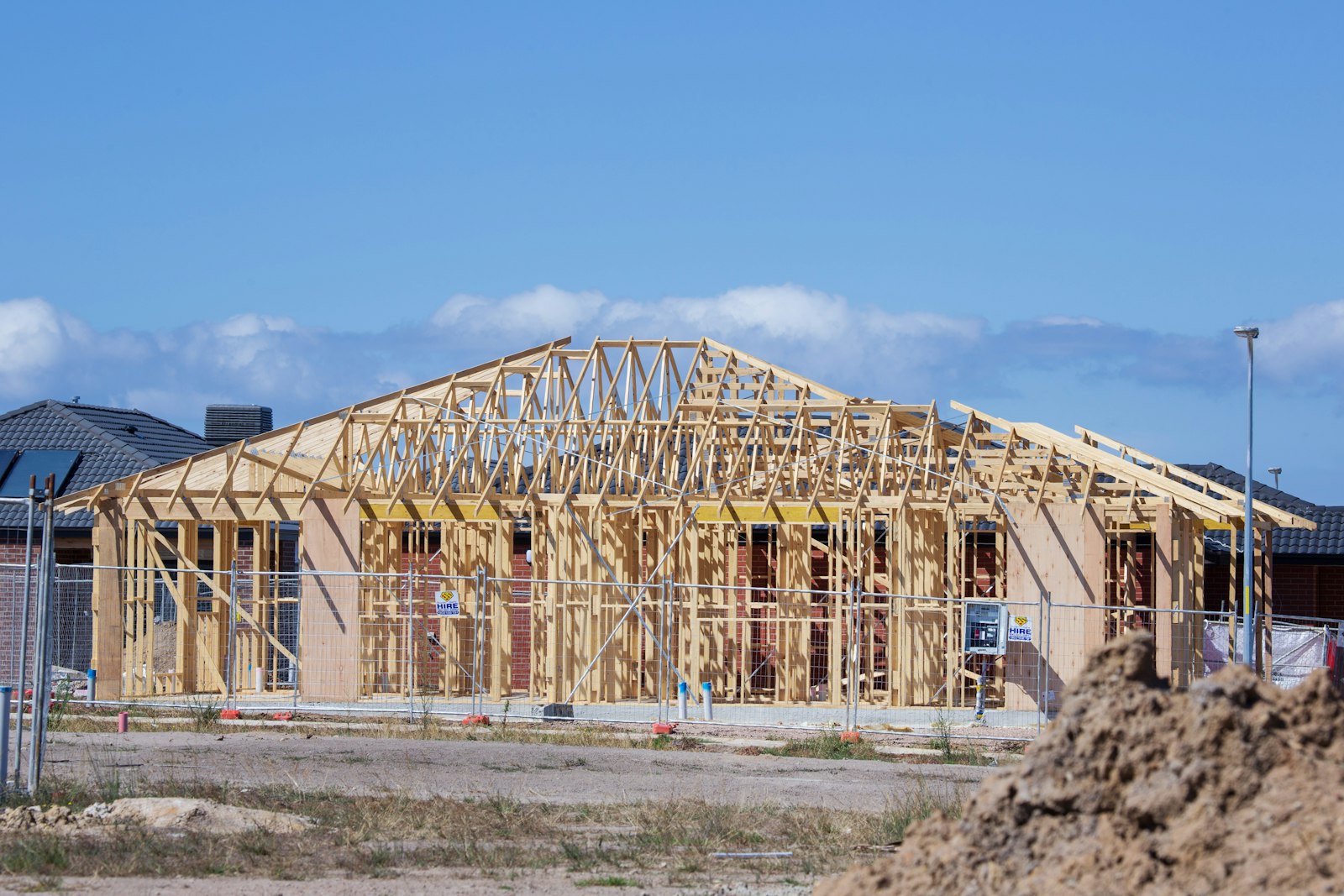
Construction safety in Australia is no longer a clipboard-and-good-intentions exercise. With the federal Closing Loopholes industrial manslaughter laws now fully active across every state and territory, a fatality on a residential or commercial site can land a director in prison for up to 25 years and trigger fines exceeding $18 million for a body corporate. Builders who treated WHS as a paperwork chore are finding out the hard way that regulators, insurers and head contractors all want to see live evidence of construction safety software in use, not a dusty SWMS folder in the site shed.
This guide walks through what Australian builders, foremen and WHS officers actually need in 2026: when SWMS are legally required, which 18 high-risk activities trigger them, how to build templates crews will actually read, the state-by-state quirks that catch people out, and how digital tools change adoption on the ground.
Why construction safety matters more in 2026
Three things have changed the risk equation for Australian builders this year. First, industrial manslaughter is now a criminal offence in every Australian jurisdiction, with the Commonwealth amendments closing the last loopholes for officers of small builders and labour-hire entities. Second, SafeWork NSW, WorkSafe Victoria, Workplace Health and Safety Queensland (WHSQ) and SafeWork SA have all published joint enforcement priorities targeting falls from height, plant interactions, silica dust and psychosocial hazards. Third, principal contractors and Tier-1 builders are pushing safety obligations down the chain by demanding digital SWMS, induction records and incident logs from every subbie before they set foot on site.
The practical impact is that a builder who cannot produce a current Safe Work Method Statement for a high-risk activity, signed by the workers performing it, is exposed on three fronts at once: regulator prosecution, insurance disputes, and being booted off head-contractor projects. Decent construction safety software closes that gap by turning compliance from a quarterly panic into a daily rhythm.
SWMS basics: what they are and when they are required
A Safe Work Method Statement (SWMS) is a document required under the model WHS Regulations (adopted with minor variations by NSW, QLD, SA, TAS, ACT, NT and WA, and mirrored in Victoria’s OHS Regulations) before any worker carries out high-risk construction work. The SWMS must be prepared before the work starts, kept on site, made available to the regulator on request, and reviewed if the work changes or an incident occurs.
A compliant SWMS must identify the high-risk construction work being done, specify the hazards and risks, describe the control measures (using the hierarchy of controls from AS/NZS ISO 31000), and explain how those controls will be implemented, monitored and reviewed. It also has to record the workers who have been consulted and trained on the document. If your SWMS is a generic PDF downloaded from a template site with no site-specific detail, regulators treat it as no SWMS at all.
The 18 high-risk construction work activities requiring SWMS
Schedule 3 of the WHS Regulations lists 18 categories of high-risk construction work. If your job involves any of these, an SWMS is mandatory:
- Work where there is a risk of a person falling more than 2 metres (3 metres in Victoria for some activities)
- Work on a telecommunications tower
- Demolition of load-bearing structures
- Disturbance of asbestos
- Structural alterations or repairs requiring temporary support
- Work in or near a confined space
- Work in shafts or trenches deeper than 1.5 metres, or in tunnels
- Use of explosives
- Work on or near pressurised gas mains or piping
- Work on or near chemical, fuel or refrigerant lines
- Work on or near energised electrical installations or services
- Work in an area that may have a contaminated or flammable atmosphere
- Tilt-up or precast concrete work
- Work on, in or adjacent to a road, railway or other traffic corridor in use
- Work in an area where there is movement of powered mobile plant
- Work in areas with artificial extremes of temperature
- Work in or near water or other liquid involving a risk of drowning
- Diving work
Most residential builders trip over the first, fifth, sixth, seventh and fifteenth items on a regular basis. If you are putting a roof on, digging footings, framing a second storey or operating an excavator near workers, an SWMS is non-negotiable.
SWMS templates that actually work on site
The biggest problem with SWMS is not their absence, it is their irrelevance. A lawyer-drafted, 14-page document covering every conceivable hazard for “working at heights” is functionally useless when a chippy is trying to get a sheet of ply onto a first-floor frame at 6:45am. Good SWMS templates share a few features:
- One activity per SWMS. Don’t bundle roof work, scaffold erection and crane lifts into the same document.
- Site-specific detail. The address, the height, the wind exposure, the access points, the nearby services. Generic equals worthless.
- Plain English controls. “Edge protection 900mm-1100mm high installed before any work above 2m” beats “appropriate fall prevention measures shall be implemented in accordance with applicable standards.”
- Photos and diagrams. A site sketch showing exclusion zones is read; a wall of text is not.
- Sign-on by every worker. Digital signatures with timestamps and GPS, ideally.
- A live review trigger. If conditions change (weather, scope, crew), the SWMS gets updated and re-signed.
Built Simple’s SWMS templates ship pre-loaded for the common high-risk activities (working at heights, excavation, demolition, mobile plant interaction, electrical proximity, hot work) and let foremen tweak controls on a phone before the morning toolbox talk. Workers sign on directly from their device and the document is timestamped to the project file. Pair that with a tidy construction document management system and your audit trail builds itself.
State-by-state regulator differences
Australia talks about “harmonised” WHS, but in practice each regulator has its own personality and enforcement focus. Builders working across borders need to know who is knocking.
SafeWork NSW
Operates under the Work Health and Safety Act 2011 (NSW). Heavy focus in 2026 on falls from height in residential construction, silica exposure from engineered stone (now banned for new installations), and psychosocial hazards. Notifiable incidents must be reported immediately by phone on 13 10 50, with written follow-up within 48 hours. SafeWork NSW inspectors are increasingly asking for digital SWMS evidence on first visit.
WorkSafe Victoria
Victoria sits outside the harmonised model and operates under the OHS Act 2004 and OHS Regulations 2017. Equivalent documents to SWMS are the safe work method statement for high-risk construction work plus the job safety analysis (JSA) for other tasks. Industrial manslaughter under the Workplace Manslaughter laws carries up to 25 years’ imprisonment and ~$18m fines. WorkSafe Victoria has been the most aggressive prosecutor in the country since 2020.
Workplace Health and Safety Queensland (WHSQ)
Operates under the Work Health and Safety Act 2011 (Qld). Industrial manslaughter offence has been in force since 2017 and has produced multiple convictions of construction directors. WHSQ has a dedicated Construction Compliance Unit and issues a high volume of improvement and prohibition notices, particularly around scaffolding, formwork and excavation.
SafeWork SA
Operates under the Work Health and Safety Act 2012 (SA). South Australia introduced industrial manslaughter into the Act in 2024. Smaller team than the eastern states but well-coordinated with SA Police on serious incidents. Strong focus on small builder education combined with targeted blitzes.
WA, NT, ACT and Tasmania each have their own minor variations. The takeaway: keep your SWMS, induction and incident systems flexible enough to adapt language and notification timeframes per jurisdiction.
Inductions, toolbox talks and incident reports: the daily safety stack
SWMS are the headline document, but the safety stack on a working site is much broader. A typical compliant residential or commercial build runs:
- Site induction for every worker before first entry, covering site rules, emergency procedures, exclusion zones and current SWMS.
- Daily pre-start (toolbox talk) covering today’s activities, hazards, weather, deliveries and visitors.
- Plant and equipment pre-start checks for every powered item.
- Hazard reports raised by any worker who sees something unsafe.
- Incident and near-miss reports within the regulator’s notification window for serious events.
- Monthly WHS committee or consultation meetings for sites above the relevant threshold.
Done on paper, this generates a filing nightmare and most of it never gets reviewed. Done in software, the same workflow becomes a defensible audit trail and a real management tool. Linking inductions and SWMS sign-on to your subcontractor management system means a subbie cannot walk on site until their docs are current.
Software vs paper: what actually changes adoption
Every builder who has switched from paper to digital safety reports the same pattern. In month one, crews complain. In month two, they stop losing forms. In month three, the foreman realises the morning briefing is faster because everyone signs on from their phone while the kettle boils. By month six, the office has a live dashboard of every SWMS, induction and incident across every site, and the annual insurance renewal becomes a 20-minute conversation instead of a week of digging through filing cabinets.
The adoption shift comes from three things software does that paper cannot: it nags people in real time, it stores evidence with a timestamp and a GPS pin, and it surfaces patterns across jobs. Pair safety data with project tracking and you can see whether near-misses are correlated with schedule pressure. That is the kind of insight that prevents the next incident, and it is also why builders are starting to track progress and safety together rather than in separate systems.
Top construction safety software for Australian builders
Built Simple
Designed for Australian small-to-mid builders. SWMS templates pre-mapped to the 18 high-risk activities, digital induction with photo ID capture, toolbox talk runner, incident and hazard reporting with state-specific notification prompts, and full integration with project, subbie and document management in one platform. Aussie support, monthly pricing, no per-user gouging.
HammerTech
Enterprise-grade platform popular with Tier-1 and Tier-2 head contractors. Deep functionality, strong on contractor pre-qualification and visitor management. Pricing and complexity tend to put it out of reach for sub-$20m builders.
SiteApp
Australian-built, mobile-first safety app focused on inductions, SWMS and pre-starts. Good for builders who want a pure safety tool without project management features.
SafetyCulture (iAuditor)
Originally a checklist app, now a broad safety platform. Excellent template library and inspections, weaker on construction-specific SWMS workflows and project linkage.
Common safety failures that get builders fined
- Generic SWMS with no site-specific detail or worker sign-on.
- No induction records for subbies and visitors.
- Edge protection installed late or removed before work above 2m is finished.
- Excavations over 1.5m entered without a current SWMS or adequate shoring.
- Late or missing incident notifications to the state regulator.
- Plant operating without pre-start checks or with expired licences.
- Asbestos disturbance without a licensed removalist and clearance certificate.
- Silica dust control failures, particularly post the engineered-stone ban transition.
How Built Simple handles safety
Built Simple bundles SWMS, inductions, toolbox talks, hazard reports and incident management into the same platform that runs your projects, subbies and documents. Foremen tick off the morning pre-start on a phone, workers sign on by tapping their name, and head office sees the lot in real time. State-specific incident workflows guide you through the right notification path for SafeWork NSW, WorkSafe Victoria, WHSQ or SafeWork SA. Templates are reviewed annually against Safe Work Australia model codes and Australian Standards. See how Built Simple works if you want to ditch the paper.
FAQs
Is an SWMS the same as a JSA or risk assessment?
No. An SWMS is a specific document required under the WHS Regulations for the 18 high-risk construction activities. A JSA or risk assessment is a broader hazard analysis tool that may be used for other tasks. In Victoria, JSA terminology is more common but the SWMS requirement still applies for high-risk construction work.
Who is responsible for the SWMS?
The person conducting a business or undertaking (PCBU) carrying out the high-risk construction work prepares the SWMS. The principal contractor must be given a copy before work starts and must keep it for the duration of the work, plus two years if there is a notifiable incident.
How long do I need to keep SWMS and incident records?
SWMS must be kept until the work is completed, or for two years from the date of a notifiable incident. Incident records and registers should be kept for a minimum of five years. Many insurers and head contractors require seven years.
Can I use the same SWMS on multiple sites?
No. SWMS must be site-specific. You can use a template as a starting point, but every SWMS must be reviewed and updated for the conditions of the actual site, the workers performing the task, and the controls available.
What is the cheapest way to get compliant?
For a small builder, a $50-$150 per month construction safety software subscription typically replaces hundreds of hours of paperwork per year and produces a defensible audit trail. The cheapest option is not paper, it is digital tools that crews will actually use.
Continue Reading
- Time Tracking Software: site sign-on and safety integration.
Related: Psychosocial hazards in construction: what the new WHS push means for your quoting and your program




