
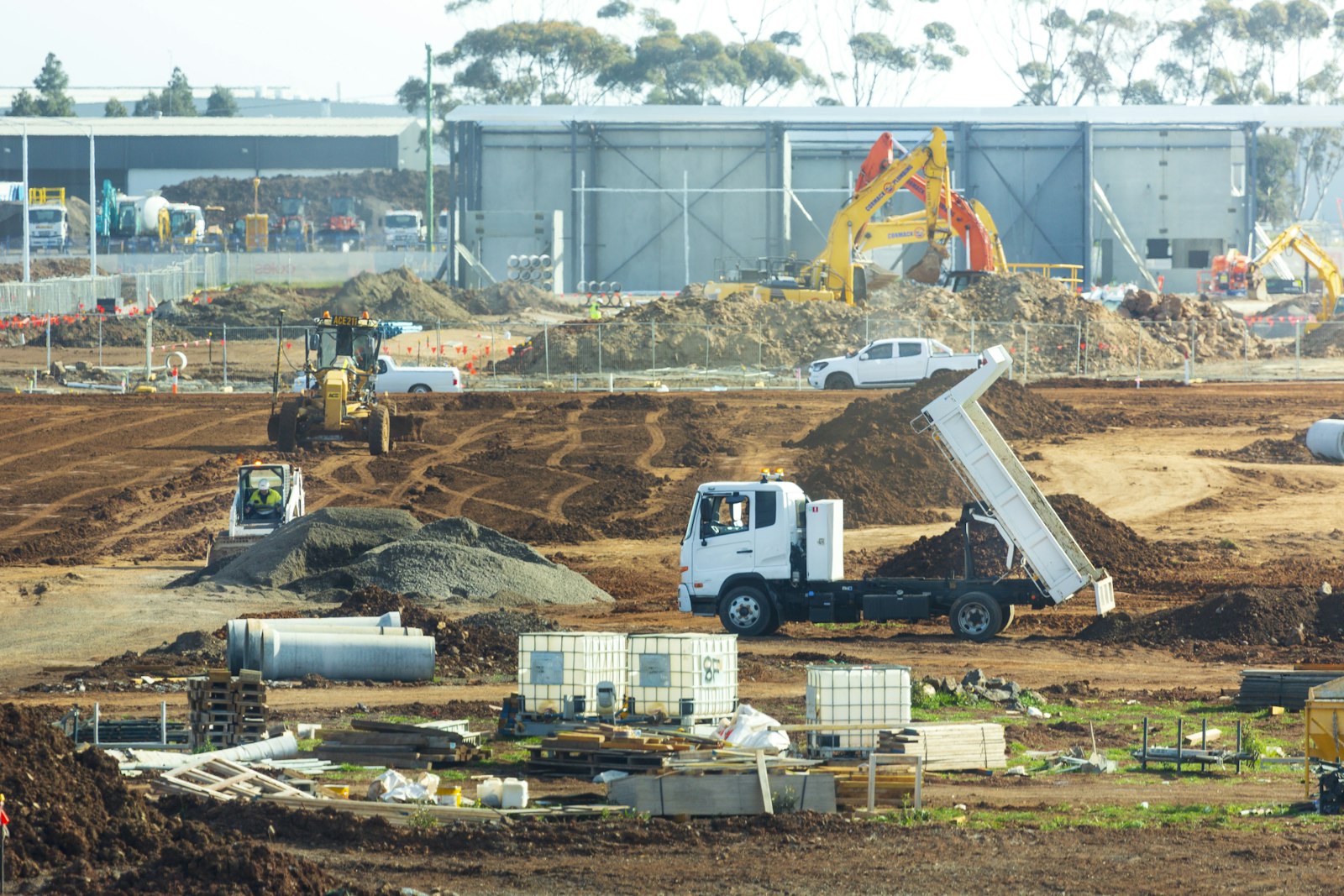
TL;DR: Retaining wall blocks come in five families in Australia: hollow concrete (besser), interlocking segmental units, cut sandstone or limestone, boulder and rock, and modular reinforced earth. Installed costs run roughly $280 to $1,200 per square metre of wall face depending on which one you pick. AS 4678 is the governing standard, the National Construction Code references it, and above 1.0m of exposed height you need an engineer's design. Drainage, not block choice, is what fails most walls.
Retaining walls are one of the most misunderstood structures on an Australian job site. Get them right and they hold back tonnes of saturated soil for fifty years without anybody thinking about them again. Get them wrong and you are looking at a bulging wall, a slab that has moved, a neighbour with a solicitor, and an insurance conversation nobody enjoys. The retaining wall blocks you choose, and how you bed, drain and reinforce them, decides which of those two outcomes you get.
This guide walks through the five block types commonly used here in 2026, what each costs installed, where AS 4678 draws the line between owner-builder territory and engineer-required design, the drainage detail that does most of the structural work, and how to price the job so you are not wearing the shortfall. It is written for licensed builders pricing a cut-and-fill, landscapers quoting a backyard terrace, and owner-builders who want to know what they can legally build themselves. All dollar figures are indicative supply-and-install ranges and exclude GST.
When do you actually need a retaining wall?
Not every slope needs retaining. The rule of thumb across Australian councils is that any change in ground level greater than 300mm over a short horizontal distance benefits from a retaining structure, and once you pass 600mm the soil pressure makes a properly designed wall non-negotiable.
You need a retaining wall when:
- Cut or fill exceeds 300mm and the natural angle of repose cannot be held (typically 30 to 35 degrees for most clay-loam soils)
- You need a level building pad, driveway, shed slab or pool surround on a sloping block
- Erosion is undermining a path, fence, tank stand or footing
- You are terracing for landscaping, vegetable beds or an accessible path
- A boundary requires the soil on one side to sit higher than the other
The taller the wall, the more lateral earth pressure it carries, and the relationship is not linear. A 1m wall holding wet clay can see over 5 kPa of horizontal load at its base, and doubling the height roughly quadruples the overturning moment at the footing. That is why block selection, footing width and reinforcement stop being preference and start being design.
One thing worth settling before you quote: a surcharge load changes everything. If a driveway, a parked vehicle, a pool, a shed or another wall sits inside the influence zone behind the wall (roughly a wedge extending back at the soil's friction angle), the wall is carrying that load too. A 900mm wall with a car park behind it is a heavier job than a 1.2m wall with lawn behind it.
The five types of retaining wall blocks used in Australia
1. Hollow concrete (besser) blocks
Standard 390 x 190 x 190mm hollow concrete blocks, usually called besser blocks after the Besser Company that popularised the machinery, are the workhorse of Australian retaining. They are core-filled with concrete and reinforced with vertical N12 or N16 bars starter-dowelled into a reinforced strip footing.
With a 10mm mortar joint you get 12.5 blocks per square metre of wall face, which makes take-off arithmetic quick: wall length x exposed height x 12.5, plus the courses below ground. Core fill sits at roughly 1 m³ per 60 to 70 blocks in a 190 series wall, though you should confirm that against the block manufacturer's data sheet rather than trusting a rule of thumb, because core geometry varies between brands.
Besser suits walls from 600mm up to around 3m when engineered, takes render, paint or stone cladding, and every bricklayer in the country knows how to lay it. If you are deciding between hollow and solid units, our guide on besser block versus concrete block covers where each one earns its place.
2. Interlocking segmental retaining wall units
Dry-stacked segmental retaining wall (SRW) units are designed specifically for retaining rather than borrowed from block work. They use a lip-and-groove or pin system that locks each course into a slight setback, so the wall leans back into the retained soil and uses its own mass plus that batter to resist overturning.
No mortar is required for walls under about 1m, which makes these by far the most popular owner-builder choice. Above 1m they need geogrid layers extending back into compacted fill, which turns the whole soil mass behind the wall into part of the structure. Get the grid lengths and vertical spacing from the engineer's design, not from the pallet label.
3. Cut sandstone or limestone blocks
Cut sandstone blocks, commonly 500 x 250 x 200mm or 1000 x 400 x 400mm, give the natural finish planning panels in Sydney's North Shore, the Adelaide Hills and Perth's western suburbs often ask for. They are heavy. A 1m block runs 200 to 300kg, so you are hiring a telehandler, an excavator with a grab, or a crane, and you are budgeting access.
They are typically dry-stacked on a compacted road base footing for walls under 1m, or pinned and grouted above that. Expect three to five times the material cost of a concrete equivalent, and expect the block sizes to vary, because they come out of a quarry rather than a mould.
4. Boulder and random rock walls
Large basalt, granite or sandstone boulders from 300kg to 2 tonnes, placed by an excavator. Fast to build, forgiving on uneven ground, and the right look for acreage and rural blocks. They work on a battered face rather than a vertical one, so you give up usable space behind the wall, sometimes a metre of it. AS 4678 still applies once they retain more than 1m of soil, and a rock wall is not exempt from needing drainage behind it just because water can find its way through the face.
5. Modular reinforced earth blocks
For commercial retaining above 3m, large precast units combined with geogrid layers create a reinforced soil mass wall. These turn up on civil work, basement walls and large residential cuts. Always engineer-designed, always with a geotechnical report behind them, and priced per project rather than off a rate card.
Retaining wall blocks compared: height, cost and difficulty
| Block type | Max unreinforced height | Installed cost per m² | DIY friendly? |
|---|---|---|---|
| Hollow concrete (besser) | 600mm | $280 to $420 | Moderate |
| Interlocking SRW units | 1.0m | $320 to $500 | Yes, the best option |
| Sandstone or limestone | 800mm | $650 to $1,200 | No, machine required |
| Boulder or rock | 1.0m (battered) | $380 to $650 | No, excavator required |
| Modular reinforced earth | Engineer-designed only | $550 to $900 | No |
Those rates assume supply and install on a reasonably accessible metro site and exclude GST. Regional work, steep sites, hand-barrow access or anything needing a traffic management plan adds 15 to 30 percent, and on tight inner-city blocks it can be more than that.
Note the units. The table is per square metre of wall face, not per linear metre of wall. To get a linear metre rate, multiply by the total retained height including the buried courses. A 900mm high wall with one 200mm course below ground is 1.1m of face, so at $380 per m² you are at roughly $418 per linear metre before drainage, backfill, disposal and margin. For a fuller breakdown of where the money goes on a retaining job, see our retaining wall cost guide for 2026.
AS 4678 and the one metre rule
AS 4678-2002 Earth-retaining structures is the governing standard for retaining wall design in Australia, and at the time of writing it remains the current edition. Every state and territory picks it up through the National Construction Code, which is published free by the Australian Building Codes Board at ncc.abcb.gov.au. The thresholds that matter on a residential job:
- Under 600mm exposed height. Generally exempt from approval and buildable without engineering certification, provided drainage is adequate and no surcharge load sits within the influence zone.
- 600mm to 1.0m. Owner-builders can usually construct these without an engineer in most council areas, but the wall still has to comply with AS 4678 on footing, drainage and reinforcement. Some councils want a development application above 600mm, particularly in flood, bushfire, heritage or landslip overlay areas.
- Over 1.0m. A structural engineer designs the wall. You need stamped drawings, a site classification under AS 2870, and typically a state certification document (in Queensland that is a Form 15, other states have their equivalents).
- Any height with a surcharge. A driveway, vehicle load, pool, building footing or a second wall above means engineering regardless of how low your wall is.
The exemptions are set by your council and your state planning scheme, not by the standard, so the height at which you need a permit genuinely differs between a Melbourne inner-suburban block and a Gold Coast hillside. We have gone through how to work out which side of the line your job falls on in retaining wall council approval in Australia.
Two more things that catch people out. Boundary walls almost always need the neighbour's written agreement and sometimes a formal notice under state fencing or party wall legislation, because you are changing the load on their soil. And if your excavation goes deeper than 1.5m, you are in shoring and benching territory under the SafeWork Australia excavation work model code of practice, which is a safety obligation on the builder, not a design question for the engineer.
Drainage is what kills retaining walls, not the blocks
Most failed retaining walls in this country are not failures of the block. They are failures of drainage. Saturated soil roughly doubles the lateral pressure a dry equivalent applies, and a wall designed for drained backfill that is then allowed to pond behind is a wall being asked to do a job it was never sized for.
The detail that works, whichever block you choose:
- A drainage zone behind the wall. At least 300mm of free-draining 20mm aggregate with no fines, full height of the wall.
- A geotextile separation layer between that aggregate and the retained soil, so clay does not migrate in and clog it. Without the fabric, the drainage zone silts up within a few seasons and then it is just wet soil that cost you money.
- A 100mm slotted agricultural drain at the base, laid to fall, sock-wrapped, discharging to a legal point. Not into the neighbour's yard, and not into a soak well that sits below the water table.
- Weep holes or a positive outlet. On a mortared besser wall, weep holes at roughly 1m centres on the bottom course above finished ground level.
- Surface shaping at the top of the wall so overland flow runs away from the wall, not into the backfill.
- Compacted fill in layers, not one bucket dump. 200mm to 300mm lifts, compacted, and keep heavy plant off the zone immediately behind the wall while it is going up.
If you are only going to spend extra money in one place on a retaining job, spend it here. The aggregate and the ag pipe are a small fraction of the total and they are the difference between a wall that stands and a wall that leans.
How to build a block retaining wall, step by step
The sequence is much the same across besser and segmental units, and the order matters more than the speed.
- Check for services first. Free enquiry through Before You Dig Australia, and allow for the response time in your programme.
- Set out and check the levels, then confirm the retained height including the courses that will sit below finished ground. This is where quotes go wrong, because the wall is always taller than the bit the client sees.
- Excavate the footing trench to the engineer's depth, or to a compacted road base bed 150mm to 200mm deep for a dry-stacked wall under 1m.
- Pour the footing and set the starter bars for a core-filled wall, or screed and compact the levelling pad for a segmental one. Get the first course dead level. Every error here is multiplied up the wall.
- Lay the base course and check it twice. On a segmental wall, bury at least the first course, more on taller walls.
- Build up in courses, laying the drainage aggregate and ag pipe as you go rather than at the end. Install geogrid at the engineer's spacings and pull it taut into the fill.
- Core fill in lifts on a besser wall, rodding to remove voids, and keep the reinforcement centred.
- Cap, backfill, compact, and shape the surface so water runs away.
- Photograph the drainage before it is buried. This is the cheapest defect insurance you will ever buy, and it is the one thing a client can never see once the job is done.
Costing retaining wall blocks without losing the job or the margin
Retaining is one of the easiest line items to underquote, because the visible wall is a fraction of the work. The items that get missed, in rough order of how often we hear about them:
- Spoil disposal. A 20m cut-and-fill can generate 30 tonnes of excess material, and tipping fees vary by state and by whether the soil is classified as clean fill.
- Access. Wheelbarrow access instead of machine access can double the labour on the same wall.
- The buried courses. Quote on total wall face, not on exposed height.
- Drainage materials and the discharge point. If the legal discharge point is 25m away, that trench is part of the job.
- Engineering, soil classification and permit fees on anything over 1.0m or carrying a surcharge.
- Weather. Clay that is saturated cannot be compacted, and a wet week on a retaining job is downtime you cannot claw back.
- GST. Quote clearly as ex or inc GST and stay consistent. Retaining is often a variation on a larger build, and a variation that swaps between the two is how a $9,000 wall becomes an argument.
Write the assumptions into the quote itself: the retained height you priced, the soil type assumed, the discharge point, what happens if rock is hit, and who is responsible for the neighbour's consent on a boundary wall. A rock clause is not being difficult. It is the honest way to price a hole you have not dug yet. If you want a starting structure for that, our construction quote template guide sets out the inclusions and exclusions worth carrying on every quote.
Frequently asked questions
How high can I build a retaining wall without council approval in Australia?
In most council areas, up to 600mm of exposed height with no surcharge load behind it. Between 600mm and 1.0m the rules vary by council and by overlay, and above 1.0m you need an engineer's design and almost always an approval. Check your own council's exemption schedule, because the numbers are set locally.
Do I need an engineer for a 900mm retaining wall?
Usually not for the design itself if it is under 1.0m, sits on stable ground and carries nothing behind it. You do need one if there is a driveway, a pool, a building or another wall inside the influence zone, if the site has a landslip or flood overlay, or if the wall is on a boundary and the neighbour's land loads it.
Which retaining wall blocks are best for a DIY build?
Interlocking segmental units. They need no mortar under about 1m, they self-align, they build a stable batter without you setting it out, and the manufacturers publish installation guides with base preparation and geogrid detail. Besser is achievable if you can lay block and tie steel, but the footing and core fill are less forgiving.
How many besser blocks per square metre?
12.5 blocks per m² of wall face for standard 390 x 190 x 190mm units with a 10mm mortar joint. Add the courses below finished ground, then add a wastage allowance for cuts at the ends and around steps.
What is the cheapest retaining wall in Australia?
Per square metre, treated timber sleepers are usually the cheapest to build, and concrete sleepers with galvanised steel posts sit just above them. Of the block options, hollow concrete is the lowest rate at roughly $280 to $420 per m² installed. Cheapest to build and cheapest to own are not the same thing, though: timber has a service life measured in decades at best, even at H4 or H5 treatment, and replacing a wall is dearer than building it once in block.
How long do concrete retaining wall blocks last?
A well-drained, correctly reinforced concrete block wall should last the life of the building. The failure modes are almost always drainage, undersized footings, or steel that was not adequately covered by grout, rather than the block wearing out.
Can I render a retaining wall?
Yes, on a mortared and core-filled besser wall. Leave the weep holes clear, and be aware that render hides the early warning signs of movement, so it is worth photographing the wall square-on once a year if it is a tall one.
Get the numbers right before you dig
Retaining is a job where the arithmetic decides the outcome twice: once when you price it, and once when the engineer sizes the footing. Block counts, course heights, drainage aggregate volumes and base material all come off the same handful of dimensions, and doing them on the back of a plan in the ute is how a wall ends up two courses short at the step.
Built Simple is free to download on iOS and Android, and the free tier gives you all 45 calculators with no signup. Work out your quantities on site, then carry the take-off straight into a quote your client can read. More building, less admin.




