
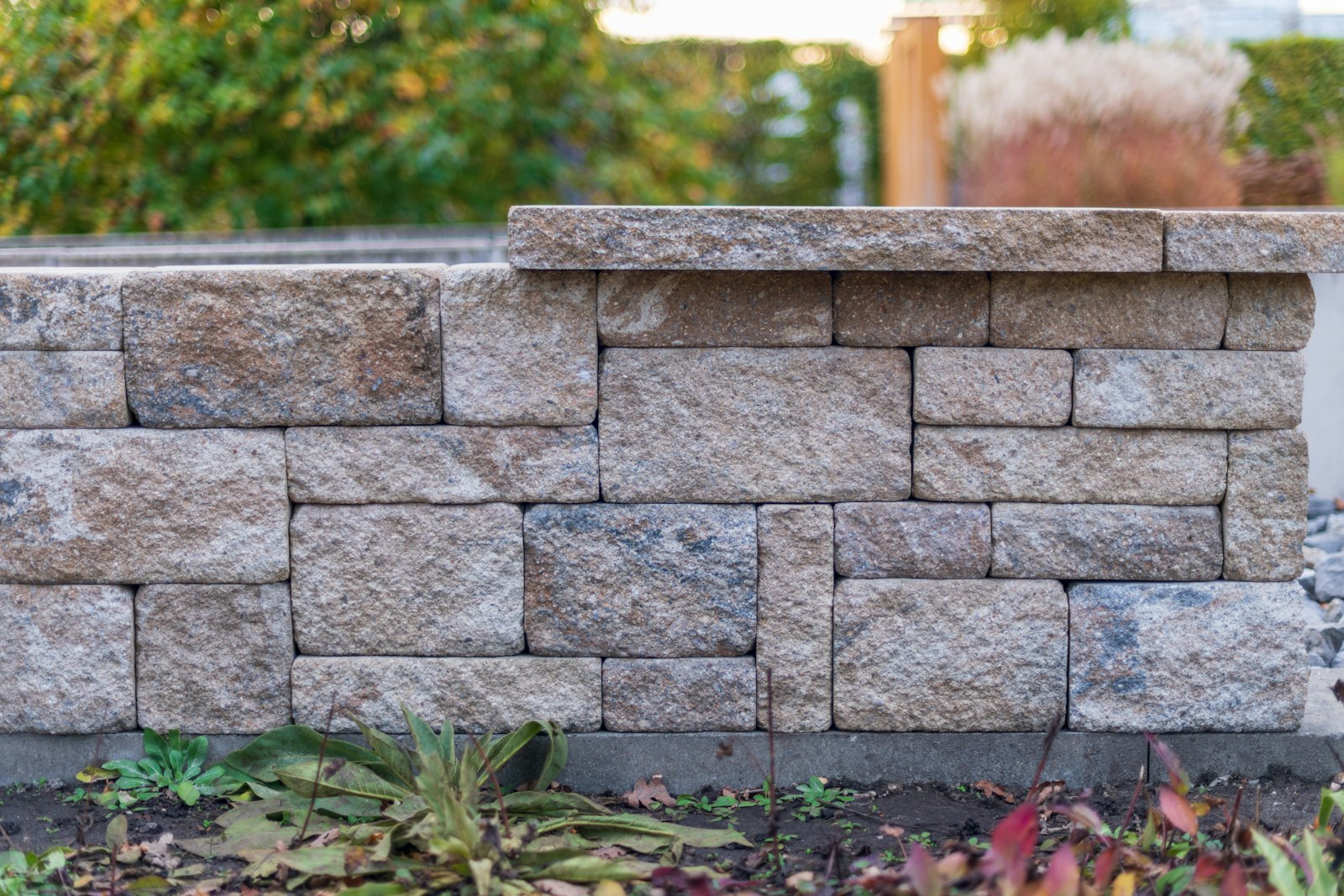
TL;DR: Any retaining wall cost calculator Australia builders use should start from these installed 2026 ranges per linear metre.
- Timber (treated pine or hardwood sleepers): $100 to $250 per linear metre installed.
- Besser block (rendered or face): $200 to $450 per linear metre installed.
- Poured reinforced concrete: $300 to $700 per linear metre installed.
- Any wall over 1 m high typically needs council approval and engineering.
- Worked example: a 10 m long by 1.2 m high besser block wall in suburban Melbourne lands around $3,800 to $5,200 in 2026 once you factor in drainage and footings.
Figures are indicative, metro and ex-GST. Pricing last reviewed October 2026.
Retaining walls look simple from the kerb. They are not. If you searched for a retaining wall cost calculator Australia builders and owner-builders can trust, here is the honest version: no single number does the job, because the price is driven by three things stacked on top of each other. The material you choose, the labour and excavation needed to install it, and the height and engineering your council enforces.
Get any one of those wrong on the quote and the job bleeds money fast. This guide gives you real 2026 Australian pricing for the three wall types people actually build (timber sleepers, besser block and poured concrete), a five-step method you can run on the back of a quote pad, the labour breakdown, and the drainage rules and council triggers you cannot ignore. If you only need block counts, jump to our free retaining wall blocks calculator.
The 3 retaining wall types in Australian backyards
Almost every residential and light commercial retaining wall in Australia is one of three types. Each has its own cost profile, lifespan and sweet spot.
1. Timber sleeper walls (pine or hardwood)
Timber is the entry-level option. Treated pine H4 sleepers are cheap and quick: dig post holes, set the posts in concrete, then slot horizontal sleepers between them. Hardwood sleepers (red gum, ironbark, recycled railway timber) cost more but last longer in damp soil.
- Lifespan: treated pine 15 to 20 years; hardwood 25 to 40 years.
- Best for: garden beds, retaining under 1 m, terracing, rural blocks and owner-builder weekends.
- Watch out for: termite risk in untreated species, post rot at the soil line, and walls that bow when drainage is skipped. The posts do the structural work, so ask your supplier what hazard class they need for your soil.
2. Besser block walls
Besser block (also called concrete masonry block or hollow blockwork) is the standard for medium-height retaining in suburban Australia. Blocks go down course by course on a poured strip footing, vertical reinforcing bar runs up through the cores, and the cores are filled with concrete. Finishes run from raw face block to rendered, painted or stone-clad.
- Lifespan: 50+ years when the wall is engineered to AS 4678, built to the masonry standard AS 3700 and drained properly.
- Best for: walls 0.5 to 2.5 m high, driveways, pool surrounds and boundary walls.
- Watch out for: skipping core fill, undersized footings and no ag drain. All three lead to efflorescence, cracking and eventually failure.
3. Poured reinforced concrete walls
Poured concrete is the premium option. You build a formwork box, tie in steel to the engineer's spec, then pour in one or two lifts. Finishes are off-form (smooth or board-marked) or rendered. Use it when the wall is tall, loaded by a driveway or building above, or sitting on a high water table.
- Lifespan: 75+ years.
- Best for: walls over 1.5 m, walls supporting structures, basements and sloping coastal blocks.
- Watch out for: form hire, concrete pump access, and the fact that any error is locked in once you pour.
2026 cost per linear metre: side-by-side comparison
These are installed prices in Australian dollars, including materials, footings, basic drainage and labour for a standard residential wall up to 1.2 m high. Regional and remote work runs 15 to 30% higher than metro. Prices climb steeply above 1.5 m because of engineering, reinforcement and access.
| Wall type | Cost per linear m (installed) | Typical height range | Lifespan |
|---|---|---|---|
| Treated pine sleepers | $100 to $180 | Up to 1.0 m | 15 to 20 years |
| Hardwood sleepers | $170 to $250 | Up to 1.2 m | 25 to 40 years |
| Besser block (face) | $200 to $320 | Up to 2.0 m | 50+ years |
| Besser block (rendered or clad) | $320 to $450 | Up to 2.5 m | 50+ years |
| Poured reinforced concrete | $300 to $700 | Up to 3.0 m+ | 75+ years |
Prices are 2026 metro, ex-GST, for walls up to 1.2 m on accessible flat sites. Add 20 to 40% for steep blocks, restricted access, engineering certificates or removal of an existing wall. GST is 10%, so a $4,000 quote ex-GST is $4,400 on the invoice.
Other published cost guides run wider than this table, and the top end for besser and concrete sleeper walls sits well above $450 per metre. That is usually tall walls, hard access or engineering bundled in. Treat any range, ours included, as a starting point, and get written quotes that state the unit (per linear metre or per square metre of wall face), what is included and whether GST is in.
Key takeaway: A per-metre rate means nothing without a height attached. Ask every subbie the same question: per linear metre at what height, and what is in it?
Need to turn block counts and footing volumes into a real material order? Run them through our Retaining Wall Blocks Calculator. It accounts for block size, course count and a 10% wastage buffer in seconds.
Retaining wall cost calculator Australia: a five-step method
There is no honest one-click number, but you can build a defensible budget in five steps before you ring anyone for quotes. Then you will know when a number is off.
- Measure length and height. Height runs from natural ground level to the top of the wall. Length is along the face. If the ground steps, split the wall into sections.
- Pick the rate. Take the range for your wall type from the table. Use the low end only for easy flat sites.
- Multiply. Length times rate is your base price.
- Add the site and paperwork. Use the 20 to 40% loading for hard sites. On an easy site that only needs a certificate, engineering and council fees alone run 3 to 8% of the total (see the breakdown below).
- Add GST and a contingency. GST is 10%. Carry about 10% on earthworks as well, because rock, old footings and wet clay only show up once the bobcat is in.
Worked example: 10 m long by 1.2 m high, rendered besser block, suburban Melbourne.
- Base: 10 m at $320 to $450 per metre is $3,200 to $4,500.
- Deeper footing, drainage, engineering and a permit allowance for a wall over 1 m lift it to $3,800 to $5,200, roughly 16 to 19% over base.
- GST at 10%: $4,180 to $5,720 on the invoice.
Compare a weekend owner-builder job: 8 m of treated pine at 0.8 m high. At $100 to $180 per metre that is $800 to $1,440 ex-GST, or $880 to $1,584 with GST. Check with council first, because a wall under 1 m often does not need a permit, but not always.
Where the money actually goes: labour cost breakdown
On a typical besser block wall in suburban Melbourne, here is roughly how a $350/m installed quote splits up.
| Cost component | Share of total | What it covers |
|---|---|---|
| Excavation and site prep | 15 to 20% | Bobcat, spoil removal, levelling, set-out |
| Footing and concrete | 15 to 20% | Strip footing, starter bars, core fill mix |
| Wall materials | 25 to 30% | Blocks, reo, mortar, ties, capping |
| Labour (build) | 25 to 30% | Bricklayer day rate, leading hand, labourer |
| Drainage and backfill | 8 to 12% | Ag drain, sock, scoria or gravel, geofabric |
| Engineering and council | 3 to 8% | Certificate, soil report, permit (walls over 1 m) |
Two takeaways:
- Excavation and labour together are 40 to 50% of the bill. Swapping a steep site with no truck access for a flat site with a bobcat path can swing the quote by thousands.
- Skimping on drainage is the most common (and most expensive) false economy. A blocked wall fails, and replacement is 3 to 5 times the original price.
Ask for quotes split along these lines. A single lump sum with no mention of drainage, spoil removal or engineering is the first thing to question. If you cannot see the soil, allow for rock as a provisional sum.
When you need council approval and engineering
Warning: the 1 metre rule. In most Australian councils, any retaining wall over 1 metre high (measured from natural ground level to the top of the wall) triggers a building permit, an engineer's certificate and usually a soil report. Some councils, particularly in steep or unstable areas, set the threshold lower.
Councils differ, so treat these as examples and not a substitute for ringing yours:
- Victoria: Boroondara Council says you always need a building permit for a retaining wall higher than 1 m.
- New South Wales: Randwick Council says many walls set at least 900 mm from the boundary are exempt development only if they are no higher than 600 mm.
- Queensland: Maranoa Regional Council says a wall over 1 m always needs a building permit, and lower walls can too if they sit within 1.5 m of a building or another retaining wall, or carry a load such as a driveway.
Under the NCC a retaining wall is a Class 10b structure, in the same bucket as fences, masts and swimming pools. That is why a building surveyor assesses it even though it does not look like a building. The ABCB's NCC site has a short video on retaining walls.
Engineers design these walls to AS 4678 Earth-retaining structures, which the NCC references as a way to comply. Standards Australia currently lists the 2002 edition as pending revision, so check the store for the latest edition before it goes on a certificate.
Height is not the only trigger. A wall holding up a driveway, a shed or a house footing carries more load (called surcharge) than the same wall holding a garden bed, and that can pull a sub-1 m wall into engineering.
Our guide to retaining wall council approval in Australia covers when you need engineering and when you don't. If you are an owner-builder, the permit side changes again, so read our state-by-state owner builder permit guide for 2026 before you book the bobcat.
Drainage: the line item that decides whether the wall lasts
Water trapped behind a wall adds weight and pressure the design assumed would not be there. Build the drainage from the base up:
- Slotted ag drain in a filter sock at the base, laid to a fall and run to a legal point of discharge. Your building surveyor or council confirms where that is.
- Free-draining gravel or scoria backfill behind the wall.
- Geofabric between the backfill and the soil, so fines do not clog the gravel.
- Weepholes or outlets where the engineer's drawings call for them.
Before the bobcat touches dirt, lodge a Before You Dig Australia enquiry (the 1100 service). A standard enquiry is free, and plans of underground assets come back to you, so allow a couple of business days. Plans are indicative only, so hand-dig near anything marked.
Quoting retaining walls without eating your margin
If you build for a living, the wall is where small assumptions turn into variations.
- Quote against a stated height, and say what happens to the price if levels change once you dig.
- List exclusions in plain words: rock, spoil removal, services relocation and removal of the old wall.
- Photograph footings, reo and drainage before backfill. Once it is buried, the photos are your proof.
A wall that moves two years after handover becomes a defect conversation, so know where you stand under construction defect liability in Australia. And if you are still pricing walls from memory or an old spreadsheet, our guide to the best construction estimating software in Australia is a good place to start.
Frequently asked questions
How much does a retaining wall cost per metre in Australia?
On our 2026 figures: $100 to $250 for timber, $200 to $450 for besser block and $300 to $700 for poured reinforced concrete. All are installed and ex-GST, for walls up to 1.2 m on accessible sites. Steep blocks, tall walls and regional work cost more.
Do I need council approval for a retaining wall under 1 m?
Sometimes. A wall under 1 m can still need approval if it is close to a building or boundary, carries a driveway or other load, or sits in a council with a lower threshold. The Randwick example above stops exempt development at 600 mm. Ring your council or building surveyor first.
What is the cheapest type of retaining wall?
Treated pine sleepers, at $100 to $180 per metre for walls up to 1.0 m. The trade-off is lifespan: 15 to 20 years against 50+ for besser block.
Can I build a retaining wall myself?
Low timber walls are a common owner-builder weekend job. Anything over your council's threshold needs a permit, and usually engineering, before you start, so check the permit side first.
How long does a retaining wall last?
Treated pine 15 to 20 years, hardwood 25 to 40, besser block 50+ and reinforced concrete 75+, as long as the drainage keeps working.
Is GST included in these prices?
No. Our figures are ex-GST. GST is 10%, so add it when you compare against a quote that states a GST-inclusive total.
The short version
Key takeaway: Budget from length times a rate that matches your wall type and height, add the hard-site loading, then GST and a contingency. Spend the money on drainage and footings, because that is what keeps the wall standing.
Material and labour prices move, so use these ranges to sanity-check quotes, not to replace them.
When you are ready to size the job, the Built Simple app is a free download for iOS and Android, and the calculators on the phone work without signing up. Grab it from the App Store or Google Play and have a play with the calculators.



